
The Art of Science: Ivanna's 'Shooting For The Stars' awarded Second Place and People's Choice Awards
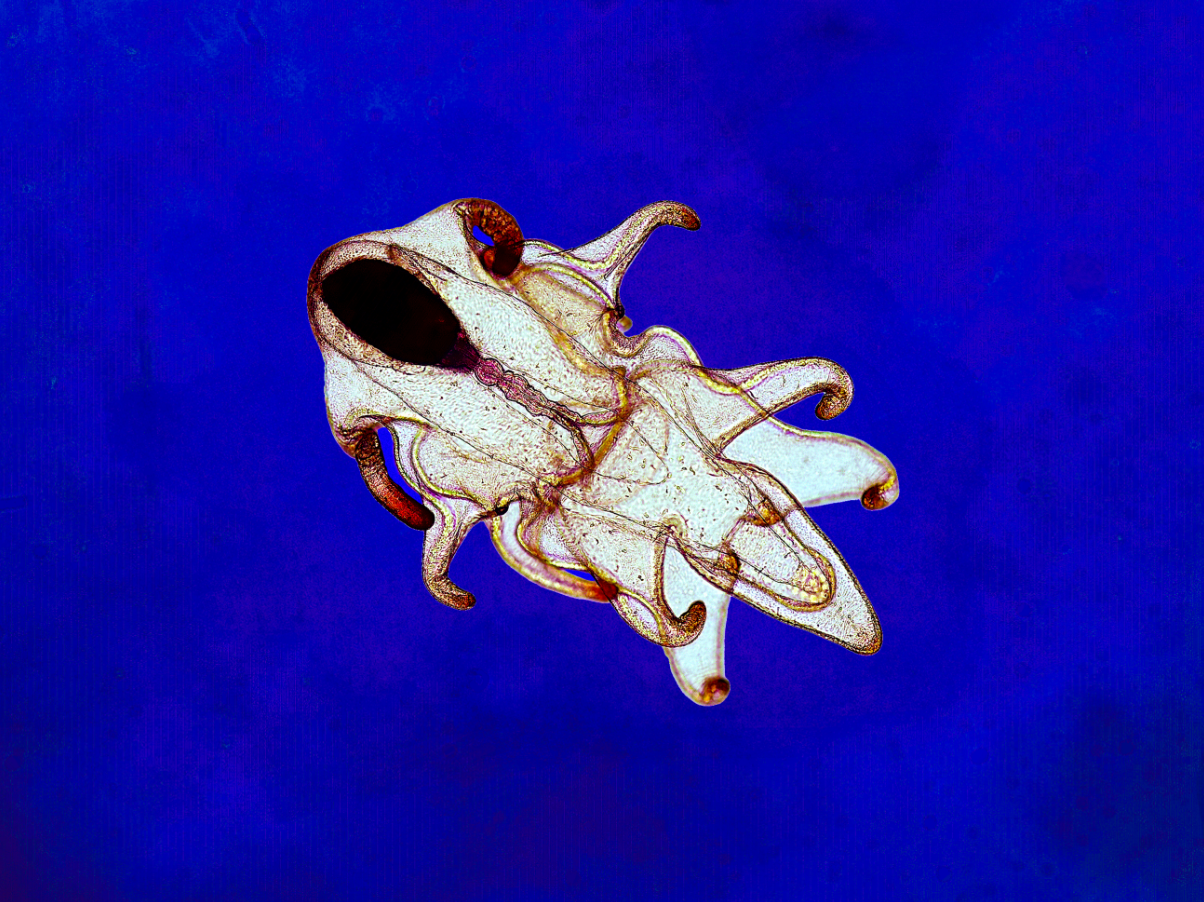
The Art of Science initiative recognizes the creative and experimental nature of science and challenges UCSB researchers to visually communicate the beauty inherent to scientific investigations. Visualizing these discoveries connects scientists, artists, and the community at large. The Art of Science initiative encourages researchers to express the joy of scientific discovery through aesthetics. Ivanna received second place and the people's choice award for her image titled Shooting for the Stars. Congratulations! View her work in the Santa Barbara Museum of Art, the exhibit is on display in the Art Learning Lab from June 2-28, 2026.
Image caption: Sunflower sea stars are a keystone predator in Pacific coast kelp forest ecosystems. Sunflower sea stars begin life as microscopic, free-swimming larvae that later settle onto the seafloor and develop into adults. The sea star shown here is a 34-day-old larva, a developmental stage that is particularly sensitive to environmental stressors that can reduce survival and affect how many sea stars make it to adulthood. In recent years, sea star wasting disease, combined with rising ocean temperatures, has caused dramatic population declines, leaving the species nearly extinct across California.
In healthy kelp forests, adult sunflower sea stars help control purple sea urchin populations, preventing urchins from overeating kelp. As sunflower sea stars have disappeared, sea urchins have contributed to the loss of more than 96% of Northern California’s kelp forests. By understanding how rising ocean temperatures affect sunflower sea stars, we can take informed action to protect our kelp forests and support sea star recovery.
